Winged Hourglass vs. Hourglass

Compare the visible evidence that separates winged hourglass from hourglass on a cemetery marker.

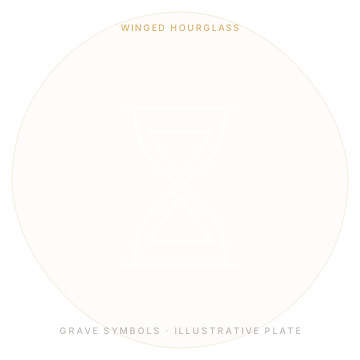
Winged Hourglass field plate

Winged Hourglass

The Winged Hourglass motif on a gravestone is commonly interpreted as time flies and life passes swiftly. It has a comparatively well-supported traditional reading; inscription, date, location and neighboring symbols should always be checked before drawing a biographical conclusion.

Look for

  • Note the number, position and direction of the wings; posture changes the reading.
  • Distinguish intentional vanitas carving from ordinary weathering, vandalism or a missing attachment.
  • Read the inscription and nearby family markers before treating the motif as biographical evidence.
Open full entry
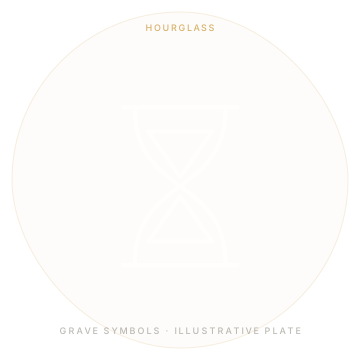
Hourglass field plate

Hourglass

The Hourglass motif on a gravestone is commonly interpreted as the passage and limitation of earthly time. It has a comparatively well-supported traditional reading; inscription, date, location and neighboring symbols should always be checked before drawing a biographical conclusion.

Look for

  • Distinguish intentional vanitas carving from ordinary weathering, vandalism or a missing attachment.
  • Read the inscription and nearby family markers before treating the motif as biographical evidence.
Open full entry

Describe the difference before naming the meaning.

Winged Hourglass is most useful when the observed form supports “time flies and life passes swiftly.” Hourglass is most useful when the form supports “the passage and limitation of earthly time.” Neither interpretation should be transferred to a biography without inscription and record evidence.

Damage can create a false match

Check whether missing elements are intentional, weathered or physically broken. Compare photographs from more than one angle and inspect other stones by the same carver or monument company.

Search Grave Symbols

Search by appearance, meaning, initials, material or organization.